Taken for a Ride: PG&E Destroys Functional Analog Meters


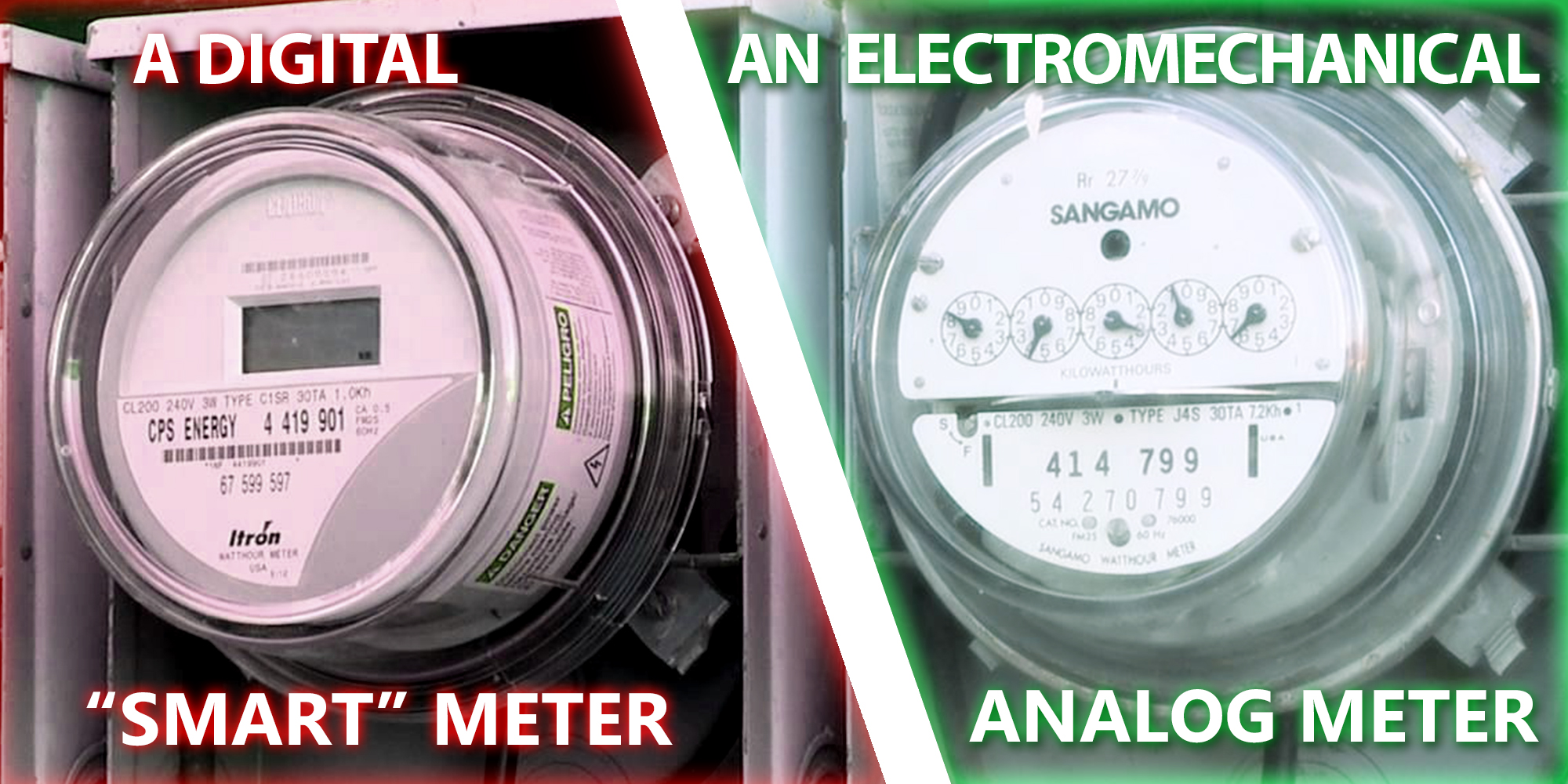
Some PG&E customers have been telling us that when they call to ‘opt out’ of the smart meter program, PG&E is saying “sorry we don’t have any analogs left.” PG&E is also justifying the high ‘opt out’ fees by claiming that it must buy brand new analog meters for these customers.

Yet PG&E- along with their contractors Wellington Energy– have removed about 9 million analog electric meters from homes throughout Northern California.  What happened to all these meters?  Our public utility wouldn’t dispose of reliable analogs that have safely measured electricity usage for over 80 years, while serious questions remain about the safety, accuracy, and durability of the new ‘smart’ meters- would they?

Indeed, under the approving gaze of the CPUC, it appears that PG&E has- over the past several years- destroyed millions of perfectly functional analog electric meters. According to the EMF Safety Network:

“The Division of Ratepayer Advocates asked PG&E to explain what they did with the analog meters after they removed them and installed Smart Meters.  PG&E  responded that although they could have gotten $1 each ($1 x millions of meters) but because the vendors wanted the meters “sorted, boxed, and palletized”, PG&E decided selling the meters was not cost-effective. Instead PG&E disposed of millions of analog meters for free to scrap metal recyclers.”

Recent testimony from PG&E’s Steve Phillips as part of the CPUC ‘opt out’ proceeding confirms that the utility is now backtracking, purchasing thousands of new analog meters to serve the growing demand from ‘opt out’ customers:

“When we first purchased back in February, our first batch of analog meters we paid $13. But we’re forecasting going forward …that cost is now $28.”

So maybe we’re just a bit slow, but here at Stop Smart Meters! we’re trying to wrap our heads around this latest revelation.  Are we to understand that despite problems related to fire safety, privacy, health damage, and mixed wireless signals leading to inaccurate bills, PG&E systematically removed and destroyed a significant part of the state’s utility infrastructure without a word from regulators?

How much would it have cost to simply store the analogs in one of PG&E’s existing facilities pending the outcome of investigations and the “opt out” proceeding?  What PG&E appears to be saying is “we were too lazy to box up the meters so we just smashed them.”

From PG&E’s perspective, the quicker they could destroy the analogs, the more secure their profitable, but reckless StupidMeter™ program would become.  However bad the problems became (and it’s hard to imagine a worse scenario than meters exploding and catching fire, and thousands of Californians reporting health damage from smart meters) PG&E could say that Californians are stuck with the new system because there simply were no analog meters available.

It’s not like PG&E didn’t know that there would be a demand for analog meters.  From 2010, there was widespread public resistance to the smart meter program.  The ‘smart’ thing would have been to hold on to these meters just in case.  Now it appears that did not happen, in spite of protests.  And PG&E now proposes to charge the public for mistakes made by its executives, who should have foreseen the demand for analogs and kept (at least some of) them in storage.

We’ve Been Taken for a Ride

This is not the first time that private corporations- acting as monopolies- have destroyed valuable public infrastructure in the name of profit and self-interest. Prior to the 1930’s the United States had one of the world’s most advanced light rail systems.   Even in sprawling Los Angeles, the Pacific Electric “Red Cars” moved millions of people quickly and conveniently between suburbs and downtown.  Such a system is today only a dream of city officials desperate to relieve congestion and reduce carbon emissions.  How did we lose such a valuable transportation system?

Starting in the 1930’s, General Motors joined Firestone, Chevron (then Standard Oil), and other auto-related corporations to form National City Lines, who bought up the streetcar companies and gradually dismantled them, replacing them with noisy, polluting, and unreliable buses and forcing people into car ownership.   Wonder why most places in America are impossible to get around except car?  It’s not by choice.  It’s by design.

GM and its partners were eventually convicted by the US Dept. of Justice for conspiracy to monopolize the local transportation field, and fined $5000.  To re-build these systems today would cost hundreds of billions of dollars.

The stack of streetcars at top left are awaiting destruction by fire- insurance that the car and bus dominated landscapes of today would not be threatened by a viable alternative.   The tragic tale is recounted in the excellent documentary Taken for a Ride, by Jim Klein and Martha Olson.  This is a must-see film with obvious parallels to our modern day corporate abuses.

The (firmly entrenched) ideology that the future is always an improvement on the past- that technological complexity is always a benefit to society, that progress requires the continuous pursuit of the exciting, new and shiny, even when the existing system simply works better- is an ideology that’s been pushed hard by corporations with products to sell.

The inconvenient truth is that America’s transportation network has grown more dangerous and less affordable, despite extensive public relations efforts by GM.  We are witnessing America’s utility system growing less reliable, less safe, and more expensive.  But that hardly seems to matter to those in power.  Utility corporations are making record profits and shareholders are happy.  The same cannot be said for the public.

The question that the smart meter debacle has raised with perhaps more fervor and relevance than ever before: is it in the public’s best interest for private, self-interested corporations to continue to be responsible for essential public services like gas, electricity, and water?  Or is there another alternative- with local areas responsible for providing their own services?

Will history repeat itself?  Will we allow millions more analogs- with years of useful life remaining- to be destroyed just as the streetcars were?  Or will we recognize the crime in progress- and take action to stop the degradation of our public infrastructure before it’s too late?

“The plan is to destroy public utilities, which you’ll find impractical to replace after you discover your mistake. Who are the corporations behind this? Why are they permitted to destroy valuable electric railways?”

-Edwin Quinby, in a warning to Americans in 1946


Posted in California, CPUC, PG&E | 14 Comments

Smart Grid Off the Rails, Says New Report

Is it possible that billions of dollars in stimulus and ratepayer funds spent on the ‘smart grid’ have been essentially wasted? A new report concludes just that.

Billions of taxpayer dollars spent on “smart meters” will not lead to U.S. sustainability; Place citizens and economy at risk
 
WASHINGTON, D.C. —  A new policy report focused on the electric grid and economy of energy, “Getting Smarter About the Smart Grid”, was published today by the National Institute for Science, Law & Public Policy (NISLAPP) in Washington, D.C. The report states that billions of dollars in federal subsidies for “smart” utility meters have been misspent on meter technology that will not lead to energy sustainability or contribute to the possibility of a more efficient and responsive electricity grid.

Authored by engineering and policy consultant, Dr. Timothy Schoechle of Boulder, CO, an expert in smart grid technologies who serves on several international smart grid standard setting committees, the new report “Getting Smarter About the Smart Grid” states:

• Congress, state and local governments, as well as ratepayers, have been misled about the potential energy and cost saving benefits of the new “smart” meters, paid for in large part with taxpayer dollars, as well as ratepayer dollars.

• The present policy approach to electricity infrastructure in the United States depicted in the report, Policy Framework for the 21st Century: Enabling Our Secure Energy Future, issued by the National Science and Technology Council (NSTC) of the Executive Office of the President, evidences a fundamental lack of understanding of the problems associated with the future of electricity and energy.

• The growing grass roots rebellion against smart meters now happening in 18 states, such as CA, VT, AZ, TX, FL, PA, ME, IL, OR and the District of Columbia, is only the “tip of the iceberg”—one that conceals a deeply dysfunctional energy economy needing urgent federal, state and local attention.

• Ratepayers’ desire to “opt-out” of the new wireless meters on privacy, security, reliability, cost and potential public health grounds may herald an “epochal transformation of the political economy of energy”.

READ FULL REPORT HERE

A conference call with the authors of the report and members of the media will take place Monday December 3rd at 1pm PST:  (641) 715-3200  passcode 784589#

Posted in Citizen rebellion, Environmental Concerns, Federal Government, Smart Grid | 10 Comments

Environmentalists Not Buying Smart Meter Greenwash

Two weeks ago, Stop Smart Meters! went to the San Francisco Green Festival, where over 30,000 environmentalists converge twice a year to discuss the state of our environment and to pick up free samples of organic products.  So are ‘smart’ meters really green?  It seems like the only people who think so are those making large profits from tax and ratepayer funds flowing to the smart grid industry.  We’re talking about groups like EDF, whose board member Ann Doerr stands to make millions if ‘smart’ meters become ubiquitous.  Nothing like the smell of cold green cash to make you forget what’s happening to the Earth.

PG&E and other utilities have spent millions on public relations firms to convince the public that ‘smart’ meters will stop climate change and reduce energy consumption.  Nothing could be further from the truth, but as we know when profits are at stake, the truth means very little to PG&E, and other corporate investor owned utility companies, who go to extreme lengths to twist and obscure it.

The above interviews provide a small glimpse into how the public is being harmed by the continuing development of the ‘smart’ grid.  How can utilities claim that ‘smart’ meter health impacts are “psychosomatic” when many of the people who report such symptoms never knew that ‘smart’ meters pose a health risk, or even that they had one on the side of their home?

We spoke to hundreds of people at the Green Festival.  The public is clearly alarmed by the evidence of health harm, privacy violations, and fires that is coming to light.  This evidence- however- seems to matter very little to the regulators responsible for protecting the public.  Despite the lack of coverage in the mainstream media, when you get out and speak to people, they are angry- very angry about these issues.  The utilities and regulators would do well to sit up and pay attention to a growing public backlash against this technology – and not sit on their hands and wait for circumstances to force them to do their jobs.

Thank you to the dozen or so people who volunteered or donated to make this critical outreach possible.  The lesson of the day- don’t sit at home, depressed about smart meter deployments.   Get out there with others who feel similarly and build the movement!  We can help support your outreach efforts.  Contact us at info[at]stopsmartmeters[dot]org.

Members of the public desperate for accurate information about utility smart meter projects mob our table at the Green Festival

A Stop Smart Meters! volunteer answers a question about smart meter radiation and human health

The question on everyone’s mind- how do we beat these stupid ‘opt out’ fees?

Posted in California, Cancer, Changing a Meter, Citizen rebellion, Electro-Hyper-Sensitivity, Fires, health effects, neighborhood organizing, PG&E, radio-frequency radiation, San Francisco | 2 Comments

The Truth About Smart Meters

Thanks to Brian Thiesen, for this excellent and comprehensive presentation on the hazards of “smart” meters. More on his organizing efforts here.

Posted in Canada, Citizen rebellion, Democracy, health effects, neighborhood organizing | 3 Comments

PG&E: “Customers Must Pay for Benefit” (Their Health)

This is Raymond Blatter, Senior Regulatory Specialist at Pacific Gas and Electric Company.  Ray lives a pretty good life, and makes a fat salary that allows him to jet off on scuba diving vacations, courtesy of PG&E’s record profits. We borrowed this photo from his public Facebook profile. (Lack of privacy is one reason we do not use Facebook) Ray had an interesting exchange last week with Sandi Maurer of the EMF Safety Network, as part of hearings for Phase 2 of the opt out proceeding at the California Public Utilities Commission.  Sandi reports on her website:

I asked Raymond Blatter, a PG&E witness the following question, “Do you consider it reasonable that if a SmartMeter is installed on someone’s home and they’re experiencing headaches or sleep problems or ringing in the ears, that that person should have to pay not to have that device on their home?”

Mr. Blatter answered, “I think that if that customer receives a benefit of not having that meter on their home, that they should pay for that benefit or at least partially pay for it.”

So there you have it ladies and gentlemen. PG&E’s official position is that not only are there “benefits” to avoiding a smart meter, but that you should be required to pay for these benefits- in this case the “benefit” of not having headaches, ringing in the ears, or other health problems associated with their “smart” meters.  If this isn’t a blatant admission of extortion we don’t know what is.  It’s right there in black and white in the transcript.

Maybe it’s time Mr. Blatter reviewed PG&E’s tightly controlled talking points a bit better before taking the stand.   Perhaps he’s still suffering from a lack of oxygen after one of his diving trips…

Posted in California, CPUC, health effects, legal issues, PG&E, San Francisco | 8 Comments